By Wei Ming Tan·Published 3 August 2026·22-minute read·Tiong Bahru, Singapore
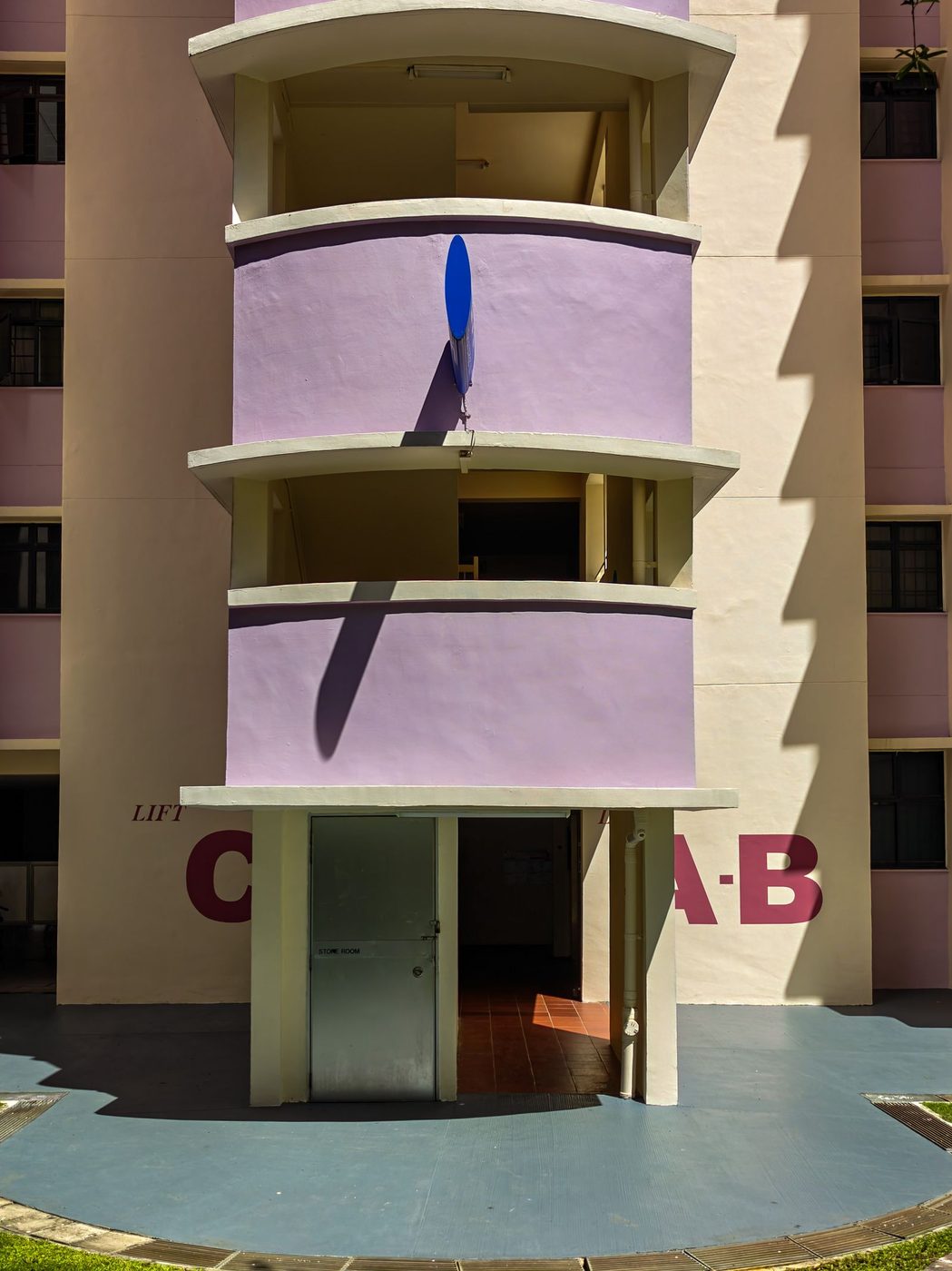
The stairwell of Block 112, Tiong Bahru — photographed on a Tuesday morning in May.
The first thing to know about Block 112 is that it should not have produced a story. It is one of the low, pre-war walk-ups on the quieter side of Tiong Bahru — three storeys, curved corners, an art-deco stairwell that lets the rain in when the wind comes from the south. Sixteen flats. On most weekday mornings I can hear four different radios from the void deck.
The second thing to know is that Mrs. Goh, who lives on the second floor in Unit 09, and Mr. Rahman, who lives directly across the landing in Unit 10, did not speak to each other for three years and one month.
What follows is what I know. Some of it I saw. Some of it Mrs. Goh's daughter Priya told me over three long conversations at the coffee shop below. Some of it I only understood in April, when the shoebox was found.
The shoes, the letter, the plants
It began in February 2022 with a pair of running shoes.
Mr. Rahman, then sixty-one and newly retired from a career in the port authority, had a habit of leaving his shoes on the shared corridor mat outside his door. This is unremarkable in Singapore. Almost every HDB corridor holds a small archive of footwear — school shoes, hawaiian slippers, the black loafers that men wear to weddings and take off before they go inside. The mat outside Unit 10 usually held two or three pairs.
Mrs. Goh, who was seventy-three and had lived at Block 112 for forty-one of those years, kept plants along her side of the corridor. Six pots in total: three of the ordinary Malaysian orchids that survive anything, a curry leaf plant she used for cooking, and two large pots of Sansevieria that had been on that corridor longer than the shoes.
In February, one of Mr. Rahman's running shoes was found — this is the phrase Priya used, "was found" — three feet inside the curry leaf plant. Its heel was buried in the soil. The plant, which was in modest health to begin with, did not recover from the visit.
"He said the wind blew it there. My mother said the wind in Tiong Bahru is very selective. That was the beginning."
What followed was a slow escalation of the kind that only happens between neighbours who see each other every single day. Mrs. Goh moved a plant so that it partly blocked Mr. Rahman's shoe mat. Mr. Rahman began keeping his shoes precisely at the boundary of what could be defended as "his side" of the corridor. Someone — Mrs. Goh insists it was not her — began sweeping a small pile of dust across the landing each evening.
The first letter
In August 2022 Mrs. Goh's son-in-law drafted a letter on behalf of the family. It was two pages long. It requested that Mr. Rahman keep his footwear inside his flat and it referred, with some formality, to Section 12 of the HDB Fire Safety Guidelines. It was slid under Mr. Rahman's door at 6:47 in the evening. I know the time because Mrs. Goh's son-in-law remembers looking at the microwave clock on his way out.
Mr. Rahman's reply came four days later. It was three pages long. It quoted, in what he later called "a spirit of research," the specific provisions of the HDB Housing and Development Act that governed the shared corridor. It included two photographs of Mrs. Goh's plants, which had, over the intervening summer, migrated closer to the centre of the walkway. It concluded by suggesting that Mrs. Goh's family might consider "a friendly conversation, over tea, at any time."
Mrs. Goh did not have tea with Mr. Rahman.
Instead she moved the plants two more centimetres.
By November the dispute had become the sort of thing the entire block knew about but nobody discussed openly. The elderly women who did their tai chi in the void deck at six in the morning would nod at Mrs. Goh and, twenty minutes later, nod at Mr. Rahman, and never say a word about the corridor. The koay teow seller downstairs told me once, quietly, that he made a point of asking after both families in equal measure, but always on separate mornings.
By March 2023 the letter exchange had reached seven rounds. In September 2023 Mrs. Goh's son-in-law filed a formal complaint with the Community Mediation Centre.
The mediator's small room
Community Mediation in Singapore is a quiet, unglamorous corner of civic life. The office where they met is on the third floor of a building on Cantonment Road, above a physiotherapy clinic and a shop that sells rubber stamps. The mediator that afternoon was a semi-retired lawyer named Kumaran who, according to the notes Mrs. Goh's daughter later shared with me, opened the session by asking each of them to describe what a good neighbour looked like.
Mr. Rahman spoke for eleven minutes.
Mrs. Goh spoke for fourteen.
Neither of them mentioned the shoes.
They spoke instead about the noise from the upstairs karaoke evenings, which was nobody's business but the third floor's. They spoke about the way the postman had put someone else's mail into Mrs. Goh's box six years ago. Mr. Rahman spoke about his late wife, who had passed away eighteen months before the shoe incident, and had loved the corridor plants "because they made the flat feel like a garden." Mrs. Goh, who had heard this before but only from a distance, was quiet for a long moment.
"They spoke for twenty-five minutes and neither of them mentioned the shoes."
— From the mediator's session notes
The mediation, technically, failed. Kumaran wrote in his summary that "the parties were unable to arrive at a mutually acceptable arrangement regarding shared corridor use." What he did not write, but told me later, was that both parties had left the office looking exhausted in a way that suggested the corridor was no longer really the point.
In April 2024 Mrs. Goh filed with the Community Disputes Resolution Tribunal. This is the point at which a corridor argument officially becomes a matter of law in Singapore. Mr. Rahman replied with a counter-filing. Both hearings were scheduled for June.
Between April and June, three things happened.
Three things that happened
First: the Town Council announced that Block 112 would undergo a full repainting programme starting in July, and that residents would need to move any corridor items into the flats for the duration. The letter arrived on the same day for both units.
Second: Mr. Rahman's son, who lives in Melbourne, flew home for a week. On the second day of his visit he made a pot of teh tarik and knocked on Mrs. Goh's door. Priya said her mother stood on the threshold for a full thirty seconds before accepting the cup. They talked for twenty minutes about nothing in particular. Then the son left, and Mr. Rahman and Mrs. Goh did not speak again for another five weeks.
Third — and this is the part I have been circling around, because it is the part that changes everything — a workman clearing out the disused storeroom in the void deck of Block 112, in preparation for the painting, found a small biscuit tin behind an old rattan chair.
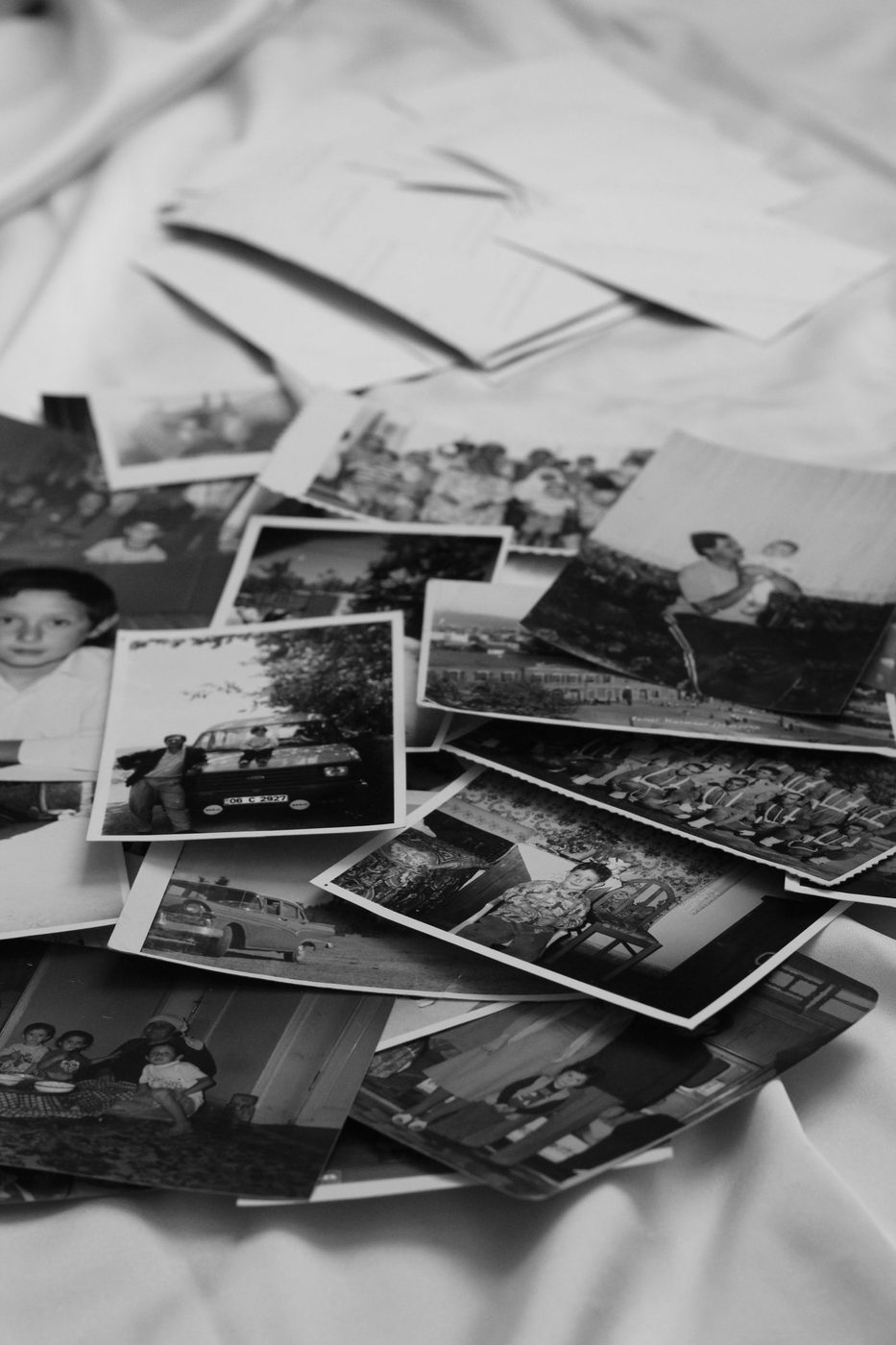
Some of the photographs from the biscuit tin. The one that mattered is not shown here; Priya asked me not to reproduce it.
The tin held forty-three black-and-white photographs. It had belonged, according to a faded piece of masking tape on the underside, to one Mr. Tan Boon Huat. Nobody by that name currently lives at Block 112. Nobody at the Town Council could immediately identify who Mr. Tan Boon Huat had been. The workman, a young man from Bangladesh who spoke very kindly about the whole thing when I met him later, brought the tin upstairs to the block chairman, who is Priya's uncle.
The photograph
I will describe the photograph as best I can.
It shows six men standing in front of what is unmistakably the entrance to Block 112 — the curved stairwell, the same tiled floor, the same low letterbox bank against the wall. The men are all in their twenties or early thirties. The photograph is dated, in faint pencil on the back, "16 September 1961."
Third from the left, in an open-collared white shirt, is a young man Priya recognised immediately from photographs in her mother's flat. It is Mrs. Goh's late father, Mr. Goh Kim Seng, who had been one of the original residents of Block 112 when it was first allocated in 1955.
Fifth from the left, standing so close to Mr. Goh that their shoulders are touching, and laughing at something outside the frame, is a young man whom Mr. Rahman recognised, when the tin was eventually shown to him, as his own grandfather. Mr. Rahman's grandfather had died in 1974. The family had, over the intervening decades, forgotten that he had lived in Tiong Bahru at all.
The two families, it turned out, had shared the same corridor sixty-three years ago. Not just the same block. The same corridor. The same landing. The photograph, according to the block chairman, had almost certainly been taken by one of the neighbours — a Mr. Tan Boon Huat, who lived in the flat directly above what was now Unit 09, and who had left his tin of photographs behind when he moved out in 1972.
"My grandfather never mentioned it. Not once. He must have known Mrs. Goh's father for years."
The two men in the photograph, Priya's grandfather and Mr. Rahman's grandfather, had — according to a subsequent conversation between Priya's mother and Mr. Rahman's older sister — been friends. Not close friends. Not brothers. But the sort of neighbours who lend each other tools and who stand together, on a September afternoon in 1961, for a photograph taken by a third neighbour who thought the light was nice.
What happens after a photograph
The court hearing did not take place. Both parties withdrew their filings in the last week of May. The stated reason on both forms — I saw them, because Priya showed me — was, in identical wording, "matter resolved by direct discussion between the parties."
The direct discussion, as I understand it, took place in Mrs. Goh's flat, over a plate of pineapple tarts that had been baked by Mr. Rahman's daughter-in-law and delivered by Mr. Rahman himself. It lasted an hour and forty minutes. Nobody has told me, and I have not asked, what specifically was said.
What I know is this: the corridor of Block 112, as of the week of writing, holds three of Mrs. Goh's plants and two pairs of Mr. Rahman's shoes. The curry leaf plant has been replaced with a new one, in a slightly larger pot, and Mr. Rahman waters it on Sundays, when Mrs. Goh visits her sister in Woodlands. The photograph from September 1961 has been reprinted twice, once for each family. The original is in a small frame in Mrs. Goh's living room. She showed me when I came for tea in June.
There is a version of this story that ends with a tidy moral about how enemies become friends when they discover a shared past. I do not think it is that story. Mr. Rahman and Mrs. Goh are not friends. They are, more accurately, two neighbours who have discovered that they are on the third generation of a conversation that has been going on longer than either of them realised.
That is not the same thing as friendship. But in the small country I grew up in — the country of three-generation flats and forty-year corridors and the same kopitiam on the corner since before I was born — I think it may be a better thing than friendship. It is a form of attention.
The tin, incidentally, is being catalogued. Priya's uncle has arranged for the National Archives to make copies of all forty-three photographs. Mr. Tan Boon Huat's descendants, if any can be found, will be contacted. There will be a small exhibition, later this year, at the Tiong Bahru Community Centre.
I plan to go. I would like to see, if only from a distance, what the original photograph looked like. But mostly I would like to know something simpler.
I would like to know what the two men in the photograph were laughing at.