Between 2016 and 2019 I lived in a small studio flat on the twenty-second floor of a condo behind Beach Road. My window faced west. From my kitchen counter I could see, more or less clearly, the top three floors of Marina Bay Sands and, on evenings when the light was low, the entire Singapore Flyer.
I visited the Marina Bay observation deck exactly once, in the third year of living there. My mother had flown in from Penang for four days. She wanted to see the view. I did not tell her that I had never been. On the way up in the lift I pretended to explain the neighbourhood.
This is not a Singapore-specific phenomenon. Every city has residents who do not visit its landmarks. Berliners do not go to the top of the TV Tower. Parisians avoid Montmartre. New Yorkers pretend they have never been to Times Square. But there is something particular about Singapore's version of this, which I have been thinking about for a long time, and which I would like to try to describe.
The city as postcard
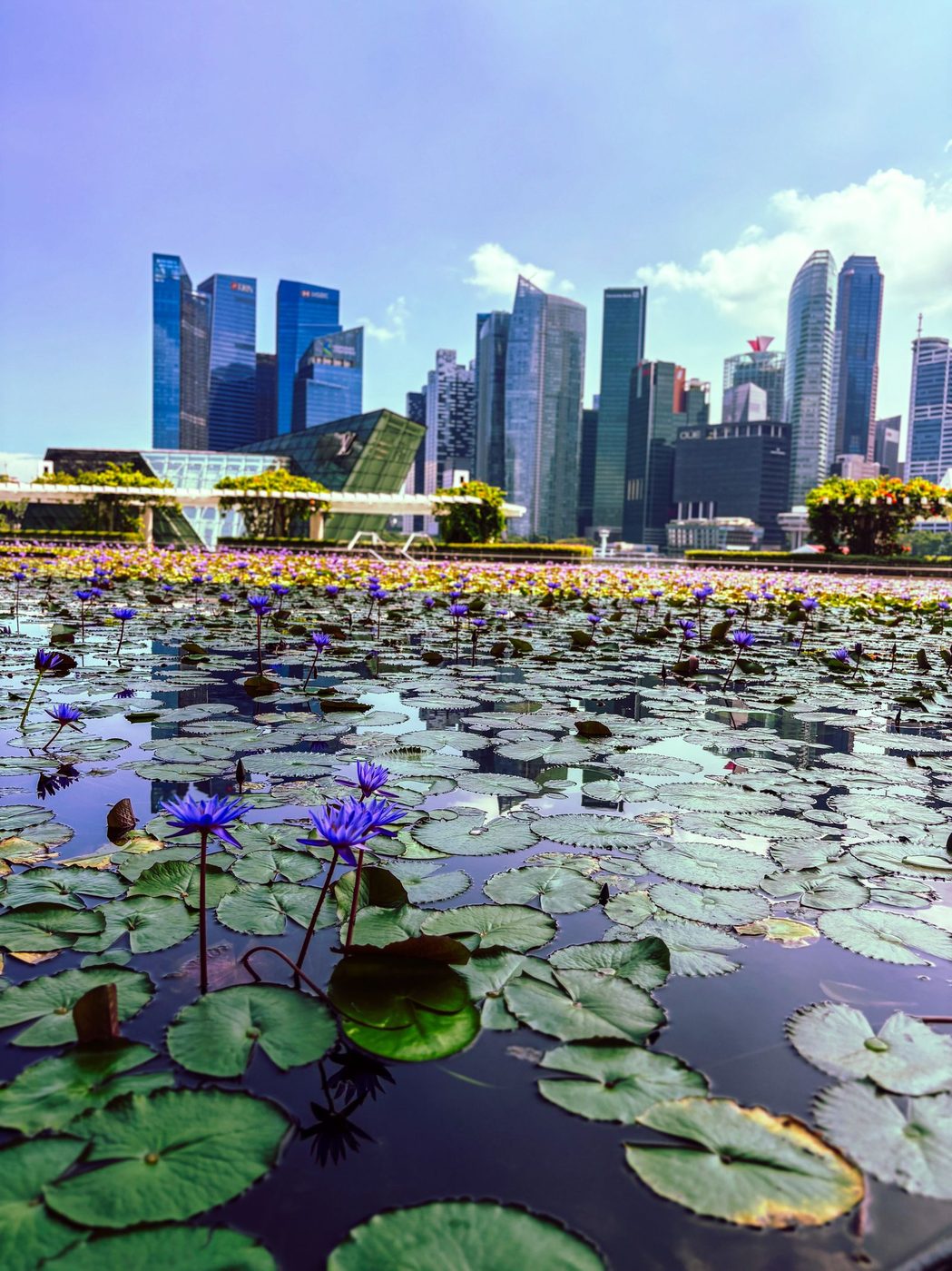
Singapore knows what it looks like from the tourism poster. There is one specific composition — the Marina Bay skyline at blue hour, viewed from either the Esplanade side or the Merlion side — that has been photographed so many millions of times that the actual view now looks like a Photoshop rendering of itself. When I stand there in person, on the rare occasions when I do stand there, my brain refuses to register what I am looking at. It knows this view too well from Instagram to see it fresh.
This is not a criticism of Marina Bay. Marina Bay is objectively spectacular. It is a criticism of what living somewhere does to your capacity for wonder. The postcard version of a place, once you live there, becomes a version you are aware of but no longer experience.
The city as apartment
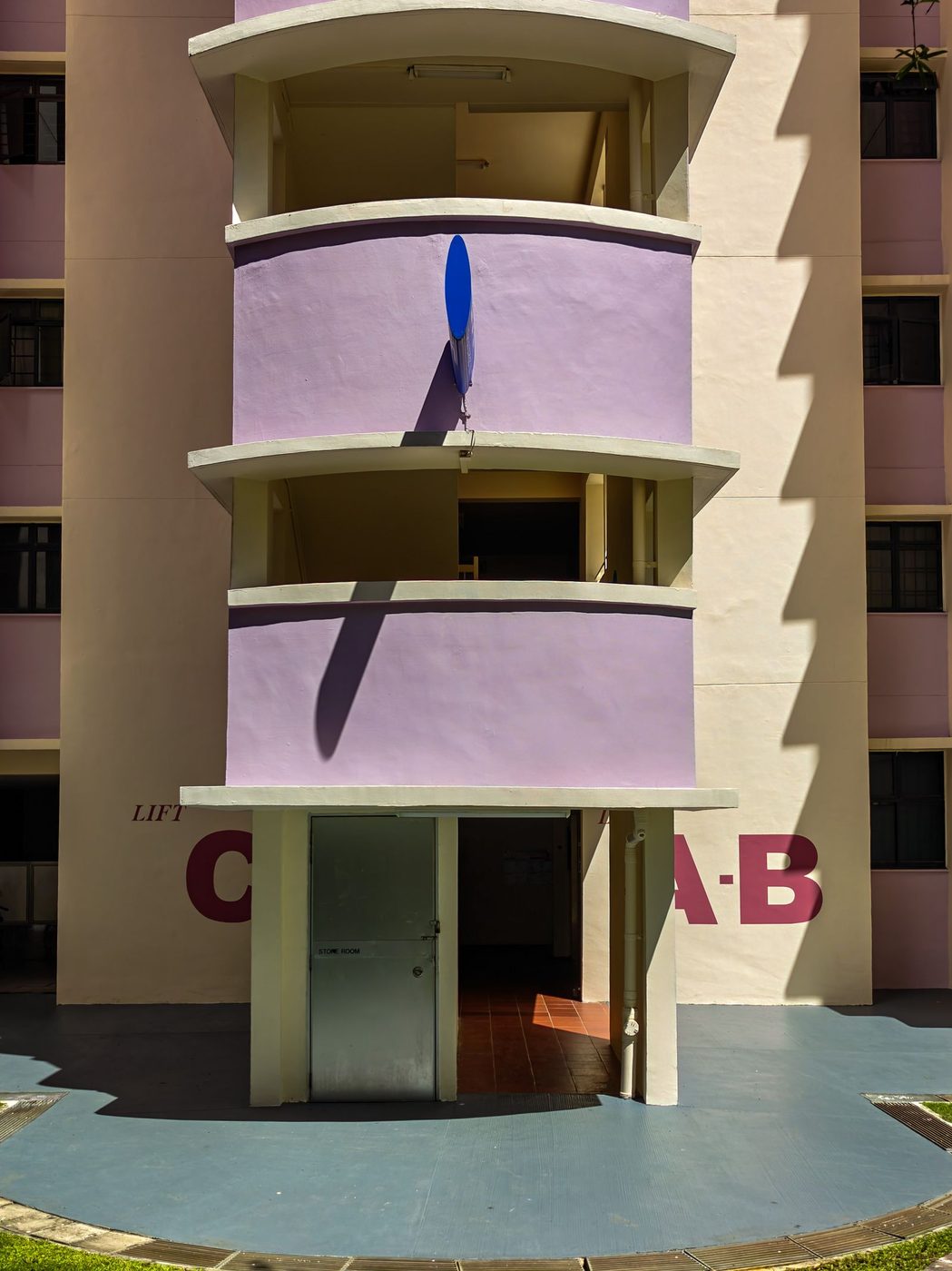
What I live in, instead, is a different city — smaller, cooler, more repetitive. It is defined by the fifteen-minute walk from my flat to Tiong Bahru Market. By the specific corner of the corner where the fruit-seller sets up his stall. By the shortcut through the void deck of Block 74 that saves me forty seconds on a rainy morning. By the fact that the second floor of the market gets particularly hot on Thursdays, when a certain chicken-rice stall is doing full production runs.
This city is not visible in any photograph. It has no observation deck. It is entirely constructed out of small habits and small preferences, and it is, in the sense that matters most to me, the city I actually live in.
"The city on the postcard is the one they built for you. The city on your walk to breakfast is the one you built for yourself."
What my mother saw
On the observation deck, that one visit, my mother did not look at Marina Bay Sands. She looked instead down at the water. She said, "It is so still. Is it always this still?" I told her, honestly, that I did not know. I had never looked. She said, "Every night you eat dinner two kilometres from this water and you have never checked?"
I do not remember what I answered. What I remember is that a week later, back in Penang, she called me and asked me, on a video call, to hold the phone up to my kitchen window so she could see the Flyer. She said, "You are lucky. Look at that. Look at that." And I looked. And, for the first time in three years, I did in fact look.
She was right. It was — is — remarkable. I have not lived in that flat since 2019. I moved to Tiong Bahru because I wanted a neighbourhood that could not fit inside my kitchen window. But sometimes, on a Sunday evening, when I am back in that part of town for a meeting, I look up at the Flyer for a minute longer than strictly necessary.
Not because I want to be a tourist in my own city. I do not. I want to keep the city I have built. But I would like to remember, at least once a year, that the postcard is not lying. It is simply describing a view that I stopped seeing.